... about that image to the top right of the page. WRiTE CLUB?? What the heck is that??
It's a chance, people. An amazing chance to submit your own unpublished writing in a 500-word sample and have it anonymously go head-to-head with another sample in weekly bouts. The two samples each week will be judged by bloggers and writers like you. It's the third year for this annual contest. You may not be chosen, but you definitely won't be chosen unless you enter!
Visit DL Hammons' blog, Cruising Altitude 2.0 for details. But hurry -- you only have until June 30, 2013 to submit your writing!
Friday, June 14, 2013


Sunday, June 2, 2013
In Search of Goliathus Hercules Blog Tour -- and a Giveaway!

Today, I'm participating in the
blog tour for In
Search of Goliathus Hercules.
Hardcover books available from Albert Whitman
Ebooks
available from Open Road Media
In Search of Goliathus Hercules by Jennifer Angus (Albert Whitman & Co, 2013, for ages 8 to 12)
Source: hardcover review copy from the publisher in exchange for an honest review.
 Synopsis (from Indiebound): In 1890, Henri Bell, a
near-orphan, is sent to live with his ancient great-aunt and her extensive
button collection. One rainy afternoon, Henri strikes up a conversation with a
friendly fly on the windowsill and discovers he possesses the astounding
ability to speak with insects. Thus commences an epic journey for Henri as he
manages a flea circus, commands an army of beetles, and ultimately sets out to
British Malaya to find the mythical giant insect known as Goliathus hercules.
Along the way he makes friends both insect and human, and undergoes a strange
transformation of his own.
Why I liked it: Packed with adventure and imagination, this is a fascinating story that will appeal to fans of fantasy, historical fiction, and adventure novels. Henri (pronounced On-ree) is a sympathetic character, especially as he begins to take on unusual characteristics. Though it's a thick book (350 pages) it's fast-paced and exciting enough to keep you turning pages.
And now, an exclusive interview with Jennifer Angus!

1) Hi, Jennifer and welcome to My Brain on
Books! You are, first and foremost, an artist and a professor of Design Studies
at The University of Wisconsin/Madison. You've had numerous successful exhibits
of your Victorian-style wall pieces. Is it true that you use real insects in
your patterns? And how did you become interested in insects?
Yes, all
the insects I use are real, that is with the exception of Goliathus Hercules
himself who I created in the great tradition of hoaxes with the parts of
several insects and gold glitter (everything is better with glitter!). That’s
the most common question I get asked and people also want to know if their
colour is natural which it most certainly is. I’m crazy but not crazy enough to
start painting thousands of insects.
Like most
professors part of my job is to do research. I was researching tribal minority
dress in Northern Thailand when I stumbled upon a garment from the Karen tribe
that had a fringe of green metallic beetle wings. I was stunned. Other than
butterflies I had never thought of insects as being beautiful. Through further
research I’ve discovered other groups, primarily in Asia that use insects as
embellishment and actually in the Victorian era round sequin-like shapes were
cut from beetle elytra (the hard protective outside wing) and applied to fancy
fabrics. I always say that I my interest in insects really grew out of my
research and love of textiles.
2) What
made you decide to take the next step and write a book about the insect world?
I never
intended to write a book. Really Goliathus Hercules was born when I mounted an
exhibition of the same name at the John Michael Kohler Arts Center in
Sheboygan. WI. The most common questions I get asked about my artwork are:
1. Are the insects real?
2. Is this their natural colour?
3. Did I collect them myself?
Those
questions got me thinking about collecting and the prestige of having the
rarest specimen or the largest specimen. For the exhibition I decided to create
an alter ego who is a great adventurer and collector. Goliathus hercules is the name of the fictitious insect I
have discovered and collected! The name alludes to the Latin nomenclature
insects are given, and obviously it is a very large and strong creature. The
bigger the insect, the more awe and prestige it will garner. Included in the
exhibition was a diary I have created, a record of the explorer's arduous
journey in the name of science and fame. Not coincidentally, the diary begins
on April 1st. You can read the diary entries
here http://www.jenniferangus.com/
I enjoyed creating exhibitions
with a narrative and I furthered my story with a trilogy of exhibitions
all called “A Terrible Beauty.” I also created an online, storybook version of
the narrative which you can see here http://digitalthreads.ca/en/
3) The illustrations in the
book are fascinating. Not only have you designed borders and chapter headings
with patterns of insects, but you also used what look like old photos and
postcards. It makes the book seem more realistic since you have photos of Henri
and his friends and Henri's nemesis, Mrs. Black. Did you scour antique stores
for photos from the era? Or are these recreations?
Most of the photos were purchased
on E-bay although there are also photographs of objects that I owned and had
previously used in my exhibitions such as the five year diary and the cricket
cage buttons. I created many illustrations of Mrs. Black in her various
disguises by simply Photoshopping her face into the antique photographs. That
was a lot of fun and at some point I’ll put up the ones that didn’t make it
into the book on my web site.
4) While reading this,
I thought of Franz Kafka's Metamorphosis,
but also of Roald Dahl and even The
Wizard of Oz (Mrs. Black
reminded me a bit of Miss Gulch. And of course you have a motley crew of
individuals who go on a quest). Were there any particular middle-grade novels
that influenced you? Did you read a lot of novels before writing this, or did
you just start writing?
I agree that Mrs. Black owes a lot to Miss Gulch, particularly in her appearance. I
found her absolutely frightening as a child. I’m not sure that any particular
book from my childhood influenced my writing but reading aloud to my son who is
now almost 16 probably had a greater impact. Together we really enjoyed reading
Kenneth Oppel’s Silverwing
Saga (4 books) that is about
a family of bats. He also wrote Airborn and although Oppel never reveals
its era exactly, it seems Victorian in a steam punk kind of way.
When I was a child I read Dahl’s Charlie and the Chocolate Factory (and loved it) but that’s the only
one of his books I ever read at that time. My mother was a great storyteller
and my brother and I really preferred that she tell us a story than read
anything. She told stories about growing up on Woodland Farm (the real Woodland
Farm) and how she would go down a magic well to other lands where in one everything
was blue and in another everything was yellow. We loved it and of course we
believed it all because they were her adventures. I think that my mother
instilled a real love of stories and adventure.
5) Is there a sequel in the works? Or
are you writing something new?
I have ideas for further
adventures of Henri and his friends. We’ll see if people want to read them.
*
* * * * *
* * * * *
* * * * *
* * * * * *
*
Thanks, Jennifer!
Readers, the next stop on the
blog tour is:
Monday, June
3
Guest post and giveaway
Now for my giveaway!
Please note that this giveaway is open to addresses in the U.S. and Canada ONLY. Albert Whitman will give away one SIGNED hardcover copy of In Search of Goliathus Hercules to one lucky winner. To enter, all you need to do is follow this blog (click on Join This Site in the sidebar) AND leave a comment on this post! This giveaway will end on Sunday, June 16, 2013, and the winner will be announced on Monday, June 17. Good luck!
Monday, May 27, 2013
Hiding Out at the Pancake Palace by Nan Marino
Happy Memorial Day!
We're nearly finished Deb Marshall's #MiddleGradeMay Reading Challenge and I've already surpassed my goal of reading at least 10 MG books (I read 12). Next week, I'll be interviewing Jennifer Angus and giving away a signed hardcover copy of her book as part of the blog tour for In Search of Goliathus Hercules. So be sure to come back for that.
Today's MMGM and #MiddleGradeMay feature:
 Hiding Out at the Pancake Palace by Nan Marino (Roaring Brook Press, April 2013, for ages 8 to 12)
Source: hardcover won from Katia Raina (thanks, Katia!)
Synopsis (from Indiebound): Eleven-year-old musical prodigy Elvis Ruby was supposed to win the most coveted reality show on television, TweenStar. None of the other contestants even came close to his talents. But in the middle of the biggest night, with millions of people watching, Elvis panicked and froze on national TV. So Elvis must run from the paparazzi camped outside his door and spend the summer working with his aunt and cousin at Piney Pete's Pancake Palace in the remote wilds of New Jersey. It's the perfect place to be anonymous, that is until Elvis meets Cecilia, a girl who can't seem to help blurting out whatever's on her mind.
Why I liked it: Quirky characters, an unusual premise, and a gorgeously-rendered setting, which itself becomes one of the main characters. The Pine Barrens of New Jersey are brought to life beautifully here and it's obvious that Nan Marino loves them. She lives in a town that borders the Pinelands,where she's a librarian. (I also loved the reveal near the end. There's a reason Elvis froze up and it's not what you think it is!)
Have you read any middle grade books where the setting becomes a character?
We're nearly finished Deb Marshall's #MiddleGradeMay Reading Challenge and I've already surpassed my goal of reading at least 10 MG books (I read 12). Next week, I'll be interviewing Jennifer Angus and giving away a signed hardcover copy of her book as part of the blog tour for In Search of Goliathus Hercules. So be sure to come back for that.
Today's MMGM and #MiddleGradeMay feature:

Source: hardcover won from Katia Raina (thanks, Katia!)
Synopsis (from Indiebound): Eleven-year-old musical prodigy Elvis Ruby was supposed to win the most coveted reality show on television, TweenStar. None of the other contestants even came close to his talents. But in the middle of the biggest night, with millions of people watching, Elvis panicked and froze on national TV. So Elvis must run from the paparazzi camped outside his door and spend the summer working with his aunt and cousin at Piney Pete's Pancake Palace in the remote wilds of New Jersey. It's the perfect place to be anonymous, that is until Elvis meets Cecilia, a girl who can't seem to help blurting out whatever's on her mind.
Why I liked it: Quirky characters, an unusual premise, and a gorgeously-rendered setting, which itself becomes one of the main characters. The Pine Barrens of New Jersey are brought to life beautifully here and it's obvious that Nan Marino loves them. She lives in a town that borders the Pinelands,where she's a librarian. (I also loved the reveal near the end. There's a reason Elvis froze up and it's not what you think it is!)
Have you read any middle grade books where the setting becomes a character?
Monday, May 20, 2013
Aye, methinks it's a Yorkshire post
I'm taking a break from reading "funny" middle grade books for research. (See this post for more explanation.) Hey, fifteen in a row is a little hard to take! My brain wants more substance.
For MMGM (brainchild of Shannon Messenger) and for Deb Marshall's May Middle Grade Reading Challenge, I've read three books that most people would consider more serious. Two of them I've read before, but not for many years.

The Shakespeare Stealer by Gary Blackwood (Puffin paperback, 2000, hardcover published by Dutton in 1998, for ages 9 to 13)
Synopsis (from Indiebound): Widge is an orphan with a rare talent for shorthand. His fearsome master has just one demand: steal Shakespeare's play "Hamlet"--or else. Widge has no choice but to follow orders, so he works his way into the heart of the Globe Theatre, where Shakespeare's players perform.
Why I liked it: Plenty of action and intrigue. Widge is highly entertaining as he tells his story and there's an impressive amount of character growth here. The Elizabethan details are spot on. If you like historical fiction, and especially if you're a Karen Cushman fan, you'll love this book.
One caveat: Aye, Widge's broad Yorkshire dialect is a tad annoying. Once he moves to London and joins the Players, he learns to say "I think" instead of "I wis." But he continues to spout sentences like: "Oh, gis! 'A must ha' maggots in his brain!" (p. 196) If you're not fluent in Yorkshire, it takes a while to adjust.
I first read this book many years ago when I first started working at the bookstore, but never finished the trilogy (maybe it was that Yorkshire dialect). I re-read it because on a recent trip to the library I spied the second book on the shelf.

Shakespeare's Scribe by Gary Blackwood (Hardcover published by Dutton, 2000, for ages 9 to 13)
Synopsis (from Indiebound): When an outbreak of the deadly Black Plague closes the Globe Theatre, William Shakespeare's acting troupe sets off on a tour of England. Widge, the orphan-turned-actor, knows that he'll be useful on the trip. Not only does he love the stage, but his knack for a unique shorthand has proven him one of the most valuable apprentices in the troupe. But then a mysterious man appears, claiming to know a secret from Widge's past -- a secret that may forever force him from the theatre he loves.
Why I liked it: Now that Widge is firmly entrenched in Shakespeare's troupe of actors, I feel even more involved in the story. And learning more about his past is fascinating. I can't wait to read the third book, Shakespeare's Spy. Even that Yorkshire dialect gets easier to take after a while. Note: these books MUST be read in order.

The Secret Garden by Frances Hodgson Burnett (Hardcover, J.B. Lippincott, Tasha Tudor illustrations, 1962, for ages 9 to 13).
Synopsis: If you don't know the plot by now, this is the beloved early-twentieth-century story of Mary Lennox, orphaned when her British parents die of cholera in India. She travels to Yorkshire to be the ward of her uncle Archibald. With nothing to do and no friends at first, spoiled, sickly Mary eventually discovers a secret garden and healing ensues.
My thoughts: I loved, no adored, this book as a ten-year-old and even older. I re-read it periodically, always in springtime when the buds are bursting into bloom on my cherry tree. I still have my much-loved 1962 edition with the gorgeous Tasha Tudor illustrations.
What did I think after this re-reading?
First, the racism really got to me. Anyone would be horrified at the way Mary describes the "natives" ("They're not people--they're servants who must salaam to you."). Apparently in 1911, when this book was written, this was acceptable. Makes me shudder, and realize how far we've come, thank goodness.
Second, oh, aye, tha' munnot fear, but it's that Yorkshire dialect! Burnett gives the apostrophe a good workout. As much as I love Dickon, the Yorkshire lad who befriends Mary, it's difficult to read his words ("There's naught as nice as th' smell o' good clean earth..."). And to think, I read this out loud to my kids twenty years ago. How did I do that?
Third, this book starts out with Mary as the main character, but by the end, Mary fades into the background and her cousin Colin is more important.
Despite these flaws, I still love the book for its hymn of praise to springtime and the healing power of running around in the fresh air. This is a wonderful time of year to read it. But if you know a middle grader who is reading it, you might consider discussing it with them.
Have you read The Secret Garden recently? What did you think?
For MMGM (brainchild of Shannon Messenger) and for Deb Marshall's May Middle Grade Reading Challenge, I've read three books that most people would consider more serious. Two of them I've read before, but not for many years.
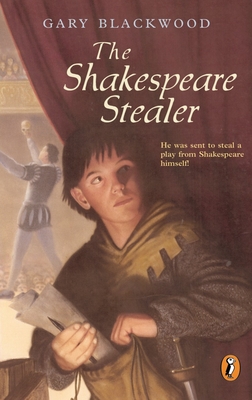
The Shakespeare Stealer by Gary Blackwood (Puffin paperback, 2000, hardcover published by Dutton in 1998, for ages 9 to 13)
Synopsis (from Indiebound): Widge is an orphan with a rare talent for shorthand. His fearsome master has just one demand: steal Shakespeare's play "Hamlet"--or else. Widge has no choice but to follow orders, so he works his way into the heart of the Globe Theatre, where Shakespeare's players perform.
Why I liked it: Plenty of action and intrigue. Widge is highly entertaining as he tells his story and there's an impressive amount of character growth here. The Elizabethan details are spot on. If you like historical fiction, and especially if you're a Karen Cushman fan, you'll love this book.
One caveat: Aye, Widge's broad Yorkshire dialect is a tad annoying. Once he moves to London and joins the Players, he learns to say "I think" instead of "I wis." But he continues to spout sentences like: "Oh, gis! 'A must ha' maggots in his brain!" (p. 196) If you're not fluent in Yorkshire, it takes a while to adjust.
I first read this book many years ago when I first started working at the bookstore, but never finished the trilogy (maybe it was that Yorkshire dialect). I re-read it because on a recent trip to the library I spied the second book on the shelf.

Shakespeare's Scribe by Gary Blackwood (Hardcover published by Dutton, 2000, for ages 9 to 13)
Synopsis (from Indiebound): When an outbreak of the deadly Black Plague closes the Globe Theatre, William Shakespeare's acting troupe sets off on a tour of England. Widge, the orphan-turned-actor, knows that he'll be useful on the trip. Not only does he love the stage, but his knack for a unique shorthand has proven him one of the most valuable apprentices in the troupe. But then a mysterious man appears, claiming to know a secret from Widge's past -- a secret that may forever force him from the theatre he loves.
Why I liked it: Now that Widge is firmly entrenched in Shakespeare's troupe of actors, I feel even more involved in the story. And learning more about his past is fascinating. I can't wait to read the third book, Shakespeare's Spy. Even that Yorkshire dialect gets easier to take after a while. Note: these books MUST be read in order.

The Secret Garden by Frances Hodgson Burnett (Hardcover, J.B. Lippincott, Tasha Tudor illustrations, 1962, for ages 9 to 13).
Synopsis: If you don't know the plot by now, this is the beloved early-twentieth-century story of Mary Lennox, orphaned when her British parents die of cholera in India. She travels to Yorkshire to be the ward of her uncle Archibald. With nothing to do and no friends at first, spoiled, sickly Mary eventually discovers a secret garden and healing ensues.
My thoughts: I loved, no adored, this book as a ten-year-old and even older. I re-read it periodically, always in springtime when the buds are bursting into bloom on my cherry tree. I still have my much-loved 1962 edition with the gorgeous Tasha Tudor illustrations.
What did I think after this re-reading?
First, the racism really got to me. Anyone would be horrified at the way Mary describes the "natives" ("They're not people--they're servants who must salaam to you."). Apparently in 1911, when this book was written, this was acceptable. Makes me shudder, and realize how far we've come, thank goodness.
Second, oh, aye, tha' munnot fear, but it's that Yorkshire dialect! Burnett gives the apostrophe a good workout. As much as I love Dickon, the Yorkshire lad who befriends Mary, it's difficult to read his words ("There's naught as nice as th' smell o' good clean earth..."). And to think, I read this out loud to my kids twenty years ago. How did I do that?
Third, this book starts out with Mary as the main character, but by the end, Mary fades into the background and her cousin Colin is more important.
Despite these flaws, I still love the book for its hymn of praise to springtime and the healing power of running around in the fresh air. This is a wonderful time of year to read it. But if you know a middle grader who is reading it, you might consider discussing it with them.
Have you read The Secret Garden recently? What did you think?
Monday, May 13, 2013
Continuing my quest...
... to figure out how to write a humorous middle grade novel, I've been researching till my eyes are bleary. Researching? I mean reading, of course!
And it all fits in perfectly, not only with MMGM (See Shannon's blog for the other links) but also with Deb Marshall's Middle Grade May Reading Challenge!
So besides Timmy Failure (last week's recommendation), what did I read so far? Three paperbacks I purchased at my local used bookstore.
 Mudshark by Gary Paulsen (Paperback published by Scholastic 2010, for ages 8 to 12)
Synopsis: Mudshark is cool. He's fast-thinking and fast-moving, and with his photographic memory, he's the go-to guy with the answers. Lost your shoe? Can't find your homework? Ask Mudshark. At least, until the Psychic Parrot takes up residence in the school library.
The word in school is that the parrot can out-think Mudshark. And right now, the school needs someone who's good at solving problems. There's an escaped gerbil running the halls, a near-nuclear emergency in the faculty restroom, and an unexplained phenomenon involving disappearing erasers. Once Mudshark solves the mystery of the erasers, he plans to investigate the Psychic Parrot. . . .
Sideways Stories From Wayside School by Louis Sachar (Paperback published 1985 by Avon, for ages 8 to 12)

Synopsis: There'd been a terrible mistake. Wayside School was supposed to be built with thirty classrooms all next to each other in a row. Instead, they built the classrooms one on top of the other...thirty stories tall! (The builder said he was very sorry.)
What I thought: This was Louis Sachar's first published book (and Louis is the yard teacher at Wayside School). I'm sure I read this many years ago, but I really didn't remember much of it. This time around, I found it a little odd, to say the least. There were quite a few laugh-out-loud moments, but on the whole I prefer Holes. However, if you have a kid reader with an unusual sense of humor (my younger son adored this book in third grade), these strange little stories would be just right. And they're very short. So there's that.
There's A Girl in My Hammerlock by Jerry Spinelli (Paperback published 1992 by Trumpet Club/Bantam Books, for ages 9 to 13)
 Synopsis: Maisie Potter isn't quite sure why she signed up for the boys' wrestling team. She's never been all that interested in boys, so it can't have anything to do with Eric Delong, in spite of the disturbing effect his smile has on her. And she's certainly not prepared for the effect her presence on the team has on the people around her.
Why I liked it: Maisie! She's feisty and stubborn and really comes to life here. You know I love Jerry Spinelli books, and usually the more serious ones, like Maniac Magee or Stargirl. This book has some really funny moments, and Spinelli's trademark older kid/younger kid interaction (Maisie has a kid sister named P.K. who's adorable) but at the same time tackles a serious subject: gender stereotyping.
Note: When the hardcover was published in 1991, this may have broken new ground, but today it does seem a little dated. And I find the title and this newer cover image misleading. It's written from Maisie's POV. But this book was by far my favorite of the three.
So what have I learned from my research?
-- Many contemporary middle grade books have a humorous element even if they're not "funny" books.
-- Laugh-out-loud books are NOT the ones I remember the most or love the most.
-- Humor can't be forced.
What do you think? Are the funny MG books the ones you remember and love? Or the deeper, more serious books?
And it all fits in perfectly, not only with MMGM (See Shannon's blog for the other links) but also with Deb Marshall's Middle Grade May Reading Challenge!
So besides Timmy Failure (last week's recommendation), what did I read so far? Three paperbacks I purchased at my local used bookstore.
 Mudshark by Gary Paulsen (Paperback published by Scholastic 2010, for ages 8 to 12)
Synopsis: Mudshark is cool. He's fast-thinking and fast-moving, and with his photographic memory, he's the go-to guy with the answers. Lost your shoe? Can't find your homework? Ask Mudshark. At least, until the Psychic Parrot takes up residence in the school library.
The word in school is that the parrot can out-think Mudshark. And right now, the school needs someone who's good at solving problems. There's an escaped gerbil running the halls, a near-nuclear emergency in the faculty restroom, and an unexplained phenomenon involving disappearing erasers. Once Mudshark solves the mystery of the erasers, he plans to investigate the Psychic Parrot. . . .
Why I liked it: This has to be the shortest MG book I've ever read. At 83 pages, and with fairly large print, this would have strong appeal for reluctant readers. But mostly it's downright funny, in a silly sort of way. Gary Paulsen manages to pack a lot into those 83 pages -- his characters are quirky, his dialogue is spot-on, and the mystery is intriguing (as an adult reader, though, I admit I found it a bit anticlimactic).
Sideways Stories From Wayside School by Louis Sachar (Paperback published 1985 by Avon, for ages 8 to 12)

Synopsis: There'd been a terrible mistake. Wayside School was supposed to be built with thirty classrooms all next to each other in a row. Instead, they built the classrooms one on top of the other...thirty stories tall! (The builder said he was very sorry.)
That may be why all kinds of funny things happen at Wayside School...especially on the thirtieth floor. You'll meet Mrs. Gorf, the meanest teacher of all, terrible Todd, who always gets sent home early, and John who can read only upside down--along with all the other kids in the crazy mixed-up school that came out sideways.
What I thought: This was Louis Sachar's first published book (and Louis is the yard teacher at Wayside School). I'm sure I read this many years ago, but I really didn't remember much of it. This time around, I found it a little odd, to say the least. There were quite a few laugh-out-loud moments, but on the whole I prefer Holes. However, if you have a kid reader with an unusual sense of humor (my younger son adored this book in third grade), these strange little stories would be just right. And they're very short. So there's that.
There's A Girl in My Hammerlock by Jerry Spinelli (Paperback published 1992 by Trumpet Club/Bantam Books, for ages 9 to 13)
 Synopsis: Maisie Potter isn't quite sure why she signed up for the boys' wrestling team. She's never been all that interested in boys, so it can't have anything to do with Eric Delong, in spite of the disturbing effect his smile has on her. And she's certainly not prepared for the effect her presence on the team has on the people around her.
Her brother's totally disgusted with her, her best friend drops her, her classmates ridicule her, and opposing teams forfeit rather than wrestle her. But Maisie's not a quitter, and she discovers that she really likes wrestling -- and that while Eric might not be worth the flak she puts up with, feeling good about herself is.
Why I liked it: Maisie! She's feisty and stubborn and really comes to life here. You know I love Jerry Spinelli books, and usually the more serious ones, like Maniac Magee or Stargirl. This book has some really funny moments, and Spinelli's trademark older kid/younger kid interaction (Maisie has a kid sister named P.K. who's adorable) but at the same time tackles a serious subject: gender stereotyping.
Note: When the hardcover was published in 1991, this may have broken new ground, but today it does seem a little dated. And I find the title and this newer cover image misleading. It's written from Maisie's POV. But this book was by far my favorite of the three.
So what have I learned from my research?
-- Many contemporary middle grade books have a humorous element even if they're not "funny" books.
-- Laugh-out-loud books are NOT the ones I remember the most or love the most.
-- Humor can't be forced.
What do you think? Are the funny MG books the ones you remember and love? Or the deeper, more serious books?
Friday, May 10, 2013


Monday, May 6, 2013
Timmy Failure: Mistakes Were Made
So how did I do for Screen-Free Week? Well... I have to admit it was hard. Mistakes were made, which ties in perfectly with the book I'm featuring this week.
I managed to stay off Facebook, Twitter, LinkedIn, YouTube -- no problem. Staying away from TV was not that big a deal, since I don't watch that much anyway. Except, gulp, Jeopardy! I actually watched it the first night without thinking. Mea culpa. Mistakes were made.
Staying away from all of your blogs and my own was tough. Okay, yes, I admit I visited Katia's because it's in my email feed and when I saw that I'd won a book from her I had to go thank her! And DL Hammons was having a contest... So yes, mistakes were made.
You may not realize how often you use the internet in your daily life. First thing Monday April 29th, I turned on my laptop to look up directions to this place*, and I thought, Wait a minute! I can't do this. It's Screen-Free Week. I continued to struggle with this for days. I wanted to look up a thousand things. For the most part, I was able to stay away, but it was difficult. How quickly we've all become accustomed to instant information.
On the plus side, I managed to read three books and write several thousand words on my current MG novel. I cleaned out our closet, got outside a lot, and worked on my flowerbeds. So I'm not a total failure. :) And on Tuesday my husband and I visited:
Now for another Marvelous Middle Grade Monday (brainchild of Shannon Messenger). I'm also participating in Deb Marshall's May Middle Grade Reading Challenge. Go see what that's all about!
Timmy Failure: Mistakes Were Made written and illustrated by Stephan Pastis (Feb 26, 2013, Candlewick, for ages 8 to 12, first book in a new series)

Source: hardcover borrowed from a friend (Thanks, Mariga!)
Synopsis (from Indiebound): Take Timmy Failure — the clueless, comically self-confident CEO of the best detective agency in town, perhaps even the nation. Add his impressively lazy business partner, a very large polar bear named Total. Throw in the Failuremobile — Timmy’s mom’s Segway — and what you have is Total Failure, Inc., a global enterprise destined to make Timmy so rich his mother won’t have to stress out about the bills anymore. Of course, Timmy’s plan does not include the four-foot-tall female whose name shall not be uttered. And it doesn’t include Rollo Tookus, who is so obsessed with getting into "Stanfurd" that he can’t carry out a no-brainer spy mission.
Why I liked it: It's hilarious! Timmy's constant misinterpretation of the clues makes him a bumbling detective like Peter Sellers in the Pink Panther movies. This will definitely appeal to fans of Wimpy Kid and Big Nate and should be a hit with reluctant readers. The chapters are short and accompanied by lots of drawings. The characters are quirky (I love the librarian, who looks like he belongs in Hell's Angels). The illustrations definitely add to the charm, as they're often showing something different from what Timmy is telling us.
If Stephan Pastis sounds familiar, he's a cartoonist and the creator of Pearls Before Swine. This is his first book for children.
Have you read Timmy Failure? If not, what illustrated middle-grade book is your favorite?
I managed to stay off Facebook, Twitter, LinkedIn, YouTube -- no problem. Staying away from TV was not that big a deal, since I don't watch that much anyway. Except, gulp, Jeopardy! I actually watched it the first night without thinking. Mea culpa. Mistakes were made.
Staying away from all of your blogs and my own was tough. Okay, yes, I admit I visited Katia's because it's in my email feed and when I saw that I'd won a book from her I had to go thank her! And DL Hammons was having a contest... So yes, mistakes were made.
You may not realize how often you use the internet in your daily life. First thing Monday April 29th, I turned on my laptop to look up directions to this place*, and I thought, Wait a minute! I can't do this. It's Screen-Free Week. I continued to struggle with this for days. I wanted to look up a thousand things. For the most part, I was able to stay away, but it was difficult. How quickly we've all become accustomed to instant information.
On the plus side, I managed to read three books and write several thousand words on my current MG novel. I cleaned out our closet, got outside a lot, and worked on my flowerbeds. So I'm not a total failure. :) And on Tuesday my husband and I visited:
 |
| *Yes, it's Hershey's Chocolate World, a haven for chocolate lovers |
* * * * *
Now for another Marvelous Middle Grade Monday (brainchild of Shannon Messenger). I'm also participating in Deb Marshall's May Middle Grade Reading Challenge. Go see what that's all about!
Timmy Failure: Mistakes Were Made written and illustrated by Stephan Pastis (Feb 26, 2013, Candlewick, for ages 8 to 12, first book in a new series)

Source: hardcover borrowed from a friend (Thanks, Mariga!)
Synopsis (from Indiebound): Take Timmy Failure — the clueless, comically self-confident CEO of the best detective agency in town, perhaps even the nation. Add his impressively lazy business partner, a very large polar bear named Total. Throw in the Failuremobile — Timmy’s mom’s Segway — and what you have is Total Failure, Inc., a global enterprise destined to make Timmy so rich his mother won’t have to stress out about the bills anymore. Of course, Timmy’s plan does not include the four-foot-tall female whose name shall not be uttered. And it doesn’t include Rollo Tookus, who is so obsessed with getting into "Stanfurd" that he can’t carry out a no-brainer spy mission.
Why I liked it: It's hilarious! Timmy's constant misinterpretation of the clues makes him a bumbling detective like Peter Sellers in the Pink Panther movies. This will definitely appeal to fans of Wimpy Kid and Big Nate and should be a hit with reluctant readers. The chapters are short and accompanied by lots of drawings. The characters are quirky (I love the librarian, who looks like he belongs in Hell's Angels). The illustrations definitely add to the charm, as they're often showing something different from what Timmy is telling us.
If Stephan Pastis sounds familiar, he's a cartoonist and the creator of Pearls Before Swine. This is his first book for children.
Have you read Timmy Failure? If not, what illustrated middle-grade book is your favorite?
Subscribe to:
Posts (Atom)