Showing posts with label brain aneurysms. Show all posts

Monday, May 6, 2019

A Teaser for Nicole Valentine's debut novel, A TIME TRAVELER'S THEORY OF RELATIVITY, Coming in October 2019

Hi everyone! I won't be around for the next two months. I'm having brain surgery this week.

Yes, you read that right.

My third aneurysm, which is unruptured, will be repaired so it can't rupture as the first two did. I'm confident that I'll be in good hands. The recuperation period should be about a month, but I'm taking some time after that to get back to doing normal things again.

Like reading and writing!


I'll be back in July with an interview with a young woman I'm proud to call my friend, debut author, Nicole Valentine, whose MG sci fi novel, A Time Traveler's Theory of Relativity pubs October 1, 2019, from Carolrhoda Books/Lerner. It's garnering plenty of praise already --  and it's a Junior Library Guild selection! Congratulations, Nicole!


Here's a teaser (i.e., the official description):

Twelve-year-old Finn is used to people in his family disappearing. His twin sister, Faith, drowned when they were three years old. A few months ago, his mom abandoned him and his dad with no explanation. He clings to the concrete facts in his physics books and to his best friend, Gabi, to cope with his sadness. But when his grandmother tells him the family secret: that all the women in their family are Travelers, he realizes he has to put his trust in something bigger than logic to save his Mom.

_____________________________________________________

I'll see you on the other side.

In the meantime, please visit other Marvelous MG Monday posts found at Greg Pattridge's blog, ALWAYS IN THE MIDDLE.


Saturday, May 12, 2018

Part 2 of What Happened to Me

So.

There's a very good reason I never responded to those comments (thank you all for your good wishes) from my last post  about what happened to me in the six months prior to that.  I posted that on January 22, 2018. And I remember feeling pretty good then.

Within days I was back in the hospital with a shunt infection. Since then I've been through another five months of illness and recuperation, including a month in the hospital (three different operations and I now have shunt #4) and a few months in rehab.  I don't remember most of it. Then I finally came home and had about six weeks with home health care -- physical and speech therapists who came to our house at our convenience to work with me. They all just discharged me this week and all told me I made amazing progress. A few even admitted they weren't sure I was ever going to come back to what I had been.

I'm thankful to be back. To be able to talk. To know what year it is, what day it is. And besides everything you would expect me to be grateful for (family, friends, etc), I'm thankful I can still type. And I can still read. But I won't be posting reviews very often because I find reading (and writing) for more than ten to fifteen minutes at a time gives me nasty headaches. And anyone with my history needs to pay attention to headaches.

But I read some gorgeous children's books this spring as I've recuperated, so I'll be telling you about them in my next few posts. 

Happy Mother's Day to all the mothers reading this post!


Monday, January 22, 2018

Where I've been and what happened to me

"I would really rather feel bad in Maine than feel good anywhere else."  
                                  E. B. White


Where I've been and what happened to me:


I'm going off topic here. Anyone who knows me or has followed this blog for a while knows that I survived a ruptured brain aneurysm in 2005. I always felt lucky, not just because I survived something most people don't but because it was the only aneurysm in my brain.

Until recently.

On September 29, 2017, my husband and I were enjoying the first full day of another vacation in Maine (we wanted to see the fall foliage) and at dinner I said to him, "I think you better take me to the hospital". Not that I have any memory of this. 

Nor do I remember that next eight weeks.

Doctors at Maine Medical Center found two more aneurysms on the basilar artery (the same artery as my 2005 rupture) and one had ruptured. They coiled it and later also installed a shunt, to drain the excess blood in my brain. 

It was a long recuperation (in fact, I'm still recuperating, even though I'm home now). After a month in the hospital, I went to a rehab center in Maine. And after six weeks there, they allowed us to come home to Pennsylvania and transfer to a different rehab center. This second rehab center is the only part I remember. 

I don't know if those lost memories will ever come back to me, but in a way I'm not sorry. Who wants to remember being in pain, having your head cut open, and being hooked up to multiple machines?


When I look at these photos my husband took I feel like I'm looking at a stranger


I know that I'm extremely lucky -- to have survived a rupture not once but twice in twelve years. I also had wonderful nurses and doctors and a supportive husband who visited me every day (my kids came when they could).

So my purpose today is to not only raise awareness of brain aneurysms but to let you know the blog is going to change. I will no longer be reviewing children's books on a regular basis. I'll still talk about an occasional superior book (how could I resist?) but I also want to share photos and thoughts on other topics. So it'll be "my brain on" other topics, not just books.

Bear with me as the blog reinvents itself.

And for more information on aneurysms, visit the Brain Aneurysm Foundation's website.


Monday, February 14, 2011

Another Marvelous Middle Grade Monday -- The Great Wall of Lucy Wu -- and a bold takeover!

Today on Marvelous Middle Grade Monday (hosted by the inimitable Shannon Whitney Messenger), I'm reviewing --

Hi!  I'm Joanne's brain aneurysm and I've commandeered this post to remind you that it's Valentine's Day and that means you should do something for those you love and take care of your own health!  Last year, Joanne gave her brain an entire post to talk about brain aneurysm awareness.  You should go read it because, ahem, I have a starring role.  Here's my picture, at the top of the basilar artery.   (Yes, I am shaped like a heart.  Sigh.)


This year, I got nada.   Zip.

She was just going to talk about some book.  Hmph.  So I had to take matters into my own hands, er, nodes.

What's the most important thing you can do to prevent aneurysm ruptures, strokes and heart attacks? 

Check your blood pressure.  

Yep.  It's that simple.  See, a normal blood pressure is about 120/70.  Joanne may not want you to know this, but when she was admitted to the ER in 2005 with the worst headache of her life, her BP was 214/140.  Yikes!  That was high.

Hey! 
 (*wrestles keyboard away*)  

Ouch!  

What do you think you're doing? (*groans*)  You had your post last year! Get away from there!

 
.
.
.

(silence)


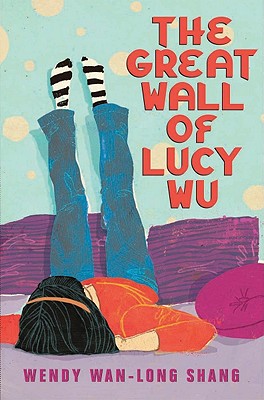
Oh, I am SO sorry about that, everyone.   Gosh.  Please excuse that rude interruption.  Now, as I was saying, today on Marvelous Middle Grade Monday, I want to talk about THE GREAT WALL OF LUCY WU by Wendy Wan-Long Shang (Scholastic, January 2011, ages 8 to 12).


Lucy loves basketball, her family and her life.  She's about to start sixth grade, where she and her class will finally rule the school.  She has a genius older brother named Kenny.  She has a best friend, Madison.  She has a tiny crush on Harrison Miller.  Best of all, she's about to get her own room because her older sister Regina is going off to college.

Life couldn't be better.

Until her parents inform her that Yi Po, her Great-Aunt from China, is coming to stay with them, and sharing Lucy's room.  In a fit of anger, Lucy builds the Great Wall, by pushing her furniture around to make a barrier between herself and Yi Po. 

Even worse, her parents tell her she's going to Chinese School on Saturdays, so she'll have to give up basketball.

This being a MG book, things have a way of working out.  Basketball practice gets moved up a couple of hours, so she's able to do both.  But how will she ever get along with Yi Po, who doesn't speak English and is embarrassingly old-fashioned?  And how will she deal with Sloane Connors, the snobbiest girl in school, who starts a campaign against Lucy when both of them are vying for Sixth Grade basketball team coach?  And will she ever be able to talk to Harrison without feeling tongue-tied?

This is a lovely book for middle graders who like contemporary girl stories.  What's especially refreshing is the intact family.  Two parents, both still alive.  No divorce.  There's a lot of realistic give-and-take among the family members.  The only thing I found slightly unrealistic was that Regina comes home from college only one time, and only stays for a few hours, saying, "Where would I sleep?"   

The best thing about the story is the voice. Lucy tells the story and she comes across as a normal sixth grader.  She's very funny.  She learns a great deal about herself and her culture, and the author integrates the information seamlessly, without ever being didactic.  Lucy's character growth comes across beautifully. You find yourself rooting for her, hoping she'll win the basketball game, defy the snobby girl, and learn how to handle Chinese School and Yi Po. 


Hope you enjoyed that.  NOW will you go check your blood pressure?

Not you again!  What do you think you're doing?  

Sheesh!

Go back inside where you belong!  *groans*  YOU'RE the one who's raising my blood pressure!

Okay! Relax!  I'm outta here!

Monday, January 31, 2011

Marvelous Middle Grade Monday -- Season of Secrets: An Open Letter to Arthur A. Levine

Dear Arthur A. Levine,

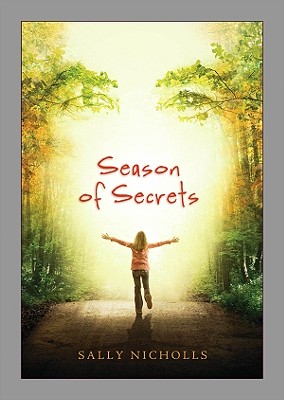
It happened again. Specifically, it happened on page 73 of the ARC of a book you published, Season of Secrets by Sally Nicholls (Arthur A. Levine Books/Scholastic, pub date Jan 1, 2011, for ages 8 to 12).


You already know what the book's about, Arthur, but give me a minute so I can have an excuse for a blog post bring my readers up to date. The book takes place in England. Molly and her older sister Hannah are grieving, each in their own way, since their mother's death. Dad can't cope and has sent them to a small village up north to live with Grandma and Grandpa. Molly, the narrator, tells us they're only staying there until Dad gets things "sorted out."

Molly's an imaginative girl who would live in a book if she could.  One rainy night she runs outside looking for Hannah and sees something incredible: a man being chased by huge dogs and huntsmen on horses.  And the lead hunter has horns growing out of his head. The hunters disappear and Molly tries to help the hunted man. He's injured and seems confused.

When Molly runs back to her grandparents' house and babbles about the man, Grandma goes outside with her, but there's nothing there. They all assume she's letting her imagination run wild.  

Later, Molly's teacher takes the class to a church to do grave rubbings, and Molly sees a statue that's exactly like the hunted man.  Her teacher tells her the legend of the Green Man, linked to the cycle of death and rebirth.  Also called the Oak King, he and the Holly King, the man with horns, fight for dominance of the seasons.

Molly befriends the Green Man, but no one else can see him. The grass around him is greener, and saplings and vines spring up, even though it's autumn.  He makes a flower grow in his hand. If he can bring things to life, can he bring back Molly's mother?

Arthur, I love the book. Don't get me wrong.  I found Sally Nicholls' first book, Ways to Live Forever, touching and beautifully written.  This book is too.  The atmosphere the author created here reminds me of The Dark is Rising, a modern classic also set in Britain.  Could there be some truth to the idea of an Oak King and a Holly King fighting it out every solstice?  It's fascinating to think about.

So what's my problem with page 73?  Well, to be honest, I'm a little upset. It happened in Tangerine.  And now it happened again in Season of Secrets.  A character, in this case, Molly's mother, died of an aneurysm.  Yes, I know people die of brain aneurysms and abdominal aortic aneurysms all the time. Thousands of them.  I know.  Louise Fitzhugh (author of Harriet the Spy) died of a ruptured brain aneurysm at the age of 46. 

Molly says (and I'm quoting the ARC here, so I hope that's okay) "An aneurysm is...where the wall of one of your blood vessels gets damaged, so blood flows into the wall and makes a balloon, which gets bigger and bigger until it explodes inside you and you die."

But not always! You don't always die!

And I'm living proof. Yes, Arthur, I'm a survivor of a ruptured brain aneurysm. And the simple truth, according to the Brain Aneurysm Foundation, is that only about 40% of people with ruptures die. That's less than half.  And with continued research, that statistic should continue to go down.

Is the book still worth buying and reading?  Oh yes, of course.  See that little label down there that says Gem of the Week?  That means I highly recommend the book.  It's lovely and luminous.  The writing is  poetic.  The details are perfect.  Except for that aneurysm thing.

Next time, Arthur.  Next time, you'll know.  Right?


Marvelous Middle Grade Monday is brought to you by the letter M and Shannon Whitney Messenger, who started it.  Click on over to From the Mixed-up Files to see what she's featuring this week.

Sunday, July 11, 2010

"If I only had a brain"


Welcome to the new followers since January. Glad you're here. So why is a children's bookseller suddenly talking about brains? If you missed them, here is another brain-related post and, oh yeah, another.

I'm a survivor of a ruptured brain aneurysm, which happened while I was on vacation in Maine in July 2005.

So it's been five years.

Tomorrow (Monday July 12) I'm having my five-year follow-up MRI/MRA. Am I nervous? Heck, yes. But I know it will be over in an hour and I'll go back to living my life, which means reading children's books and trying to write them. For now, though, I'm a brain aneurysm patient. Which brings me to...


BRAIN ANEURYSM 201

What exactly is an MRI? The letters stand for Magnetic Resonance Imaging.

According to Wikipedia: "MRI provides much greater contrast between the different soft tissues of the body than computed tomography (CT) does, making it especially useful in neurological (brain) ... imaging. Unlike CT, MRI uses no ionizing radiation. Rather, it uses a powerful magnetic field to align the nuclear magnetization of (usually) hydrogen atoms in water in the body. Radio frequency (RF) fields are used to systematically alter the alignment of this magnetization." (You can read more about this here.)

Basically, an MRI takes pictures of your brain, to look for (in my case) any new aneurysms that may have cropped up. And to check on the old one, which has been filled with platinum coils to prevent it from re-rupturing.


So, since I'm lucky enough to be having both procedures, what the heck is an MRA?

MRA stands for Magnetic Resonance Angiography. It's essentially the same as an MRI with the addition of contrast material or dye. In other words, they'll stick my arm with a needle halfway through the procedure and administer gladiolinum. According to the Brain Aneurysm Foundation, this "creates a more enhanced image."

Then we'll find out if I actually have a brain. Or not.

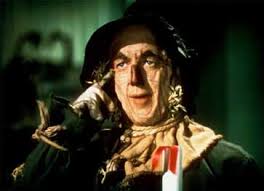
Yes, I feel a bit like the Scarecrow in the Wizard of Oz. Okay, okay, I admit it. I'm reaching here, but I always find a children's book related to my topic.

Always.


So, fellow bookbrains, think of me as I go into the tunnel tomorrow morning!

Monday, February 8, 2010

Brain Aneurysm 102: A Valentine For All of You

Hey, it's almost Valentine's Day, so if you walk into your local bookstore, you might see this clever picture book by Michael Hall:


Or this sweet story by Joanne Ryder:


Or maybe this one by Maryann Cocca-Leffler just for fun:


But because it's nearly Valentine's Day, it's also time for...

Brain Aneurysm 102.
(In case you missed Brain Aneurysm 101, it's right here.)


INTRODUCING BRAIN ANEURYSM 102:
A CONVERSATION WITH MY BRAIN


Me: It's almost Valentine's Day, so let's tell the nice people more about brain aneurysms, shall we? After all, that's what Valentine's Day is all about.

My Brain: Hearts, you dolt. Valentine's Day is all about hearts. Not brains. Sheesh.

Me: Actually, if you think about it... (Get it? Heh heh. You're a brain)

My Brain: Oh, please.

Me: Anyway, if you think about it, a brain aneurysm is a vascular problem, a bubble or bulge in an artery. And the bubble sometimes bursts (I'm one of the lucky ones whose aneurysm sealed itself immediately after rupturing). Arteries, of course, are part of the circulatory system, the one that carries blood to and from, ahem, the heart.

My Brain: Boy, you're really reaching here. Why don't you just go ahead and show them what you want to show them (*Nudge*). You know. That x-ray you're so fond of.

Me: How do you know exactly what I'm thinking? It's uncanny. It's almost as if you're--

My Brain: Yep. I know. YOUR BRAIN, you blooming idiot.

Me: Right. I knew that. But shouldn't we tell the people more about brain aneurysms first? Otherwise it's not really Brain Aneurysm 102, is it? For instance, shouldn't we tell them that people with unruptured aneurysms may be asymptomatic? On the other hand, sometimes there ARE symptoms associated with unruptured aneurysms, including dilated pupils, headaches, double vision? And if they experience these symptoms, they should seek medical help? And while we're at it, shouldn't we explain the symptoms of a ruptured aneurysm? You know this as well as I do; you lived through it. Shouldn't we tell them that those symptoms are much more serious and may include severe headache ("the worst headache of your life"), nausea and vomiting, stiff neck, blurred vision and sensitivity to light?

My Brain: Naw. Let's just tell 'em to visit the Brain Aneurysm Foundation's website, which has a lot more information that YOU seem capable of providing. Get on with the show, already. The part where you explain to these long-suffering people just exactly what your brain aneurysm has to do with Valentine's Day.

Me: Well... if you insist.

What follows is an actual x-ray taken of an artery in my brain in 2005 (back when I had a brain and it wasn't taking on a life of its own here on this blog). This was taken after my aneurysm ruptured and sealed itself and before my coiling procedure (which was done to prevent further, potentially fatal, ruptures). This shows my basilar artery, the thick vertical one that's supposed to be completely flat on top, but instead has an odd-shaped bulge protruding from the tip. THAT is my aneurysm.

And...

TA DA! It's heart-shaped:


Happy Valentine's Day!


My Brain: Oh, that was really lame. I can't believe I have to be associated with such a ridiculous piece of pseudo-bloggerism.

Me (ignoring brain entirely): And be sure to keep both your heart and your brain healthy by getting out of your chair and EXERCISING.

This will be my last post until March. I'm accepting Laurie Halse Anderson's challenge (thanks, Jeannine Norris , for the nudge) and I'm going to stop blogging and tweeting and facebooking (not that I spend much time there anyway) for a few weeks and get some writing done.

How about you? Let's start a blogging revolution.

Tuesday, September 1, 2009

Brain Aneurysm 101

Ok... so up there in my header it mentions "the brain stuff." If you wondered what that meant, I'm here to explain. And please bear with me, because this WILL tie in to books eventually. After all, books are my life. In honor of September (National Brain Aneurysm Awareness Month... if Congress ever gets around to declaring it. House Resolution 263 still needs more co-sponsors before they can pass the legislation), I present to you the basics of brain aneurysm awareness:

1) A brain aneurysm is NOT a brain tumor. They are two completely different illnesses.

2) A brain aneurysm is a bubble or bulge in a weakened wall of an artery in the brain. In my case it developed on the tip of the basilar artery.

3) According to the Brain Aneurysm Foundation, 1 in 50 people have an unruptured brain aneurysm.

4) Approximately 25,000 people per year will suffer a cerebral aneurysmal rupture.

5) According to Dr. Kwan, the neuroradiologist who coiled my aneurysm, one third of rupture patients die within 15 minutes. Of those who survive the initial bleed, one third will die of complications, one third will survive with some deficit and one third will survive and return to the baseline state.


So the odds of me fully recovering worked out to something like 1 in 9. I'm one of the lucky ones. I was able to go back to work (on a limited basis) three months after my rupture. But it took me a full year and a half to feel like myself again.

Yes, I am a brain aneurysm survivor. And, yes, I work in a bookstore. Would you believe in seven years of working in the Children's Department, the only book I've come across that treats brain aneurysms with respect is Tangerine by Edward Bloor? (Thank you, Mr. Bloor.)

Then there are books that turn aneurysms into a joke. On page 357 of Twilight by Stephenie Meyer, Bella says: "It appeared that Charlie was having an aneurysm." She does something similar in New Moon, when Bella tells Jacob, "Don't have a brain hemorrhage, Jacob." As someone who actually had a brain hemorrhage, I can tell you there is nothing funny about it.

Now if someone would just write a book in which the brain aneurysm sufferer actually lives...

Monday, August 24, 2009

Do you write every day? Part One

Ok, so enough bookseller recommendations and thoughts for a while. Now I want to talk about writing. That's really why most bloggers are here, right? We love to -- no, need to -- write.

I started writing when I was eight years old. I can still remember the awful story I wrote about a girl who died and saw a path to heaven (yes -- it was that dreadful) . I ripped it into pieces and tossed in the wastebasket. Off and on throughout my school years, I wrote depressing stories and depressing poetry. In college, I went more for the urbane, sophisticated short stories. I thought I'd get published by The New Yorker. Ha. No publishing credits to my name, other than the college literary magazine, but I kept writing. Off and on. Off and on. I'd write furiously for a month or two, then stop writing for a few months or a year. (Get the picture yet?) In my twenties, I plugged away at short stories and started branching out into essays. Rejection letters began to pile up in earnest. Still I wrote off and on. A few months off. A few months on.

I married at 30 and my first son was born when I was 32. That's when I started trying to write children's books, specifically picture books. I collected more rejection letters and long before my second son was born (when I was 35), I had given up. Kaput. No more.

Most of the time I was too exhausted to clean the house, let alone write picture books. I've never understood how mothers of young children can also write. Maybe if I'd kept up with the writing and stopped worrying about cleaning the house, I'd be published by now.

I'd have a filthy house and probably be divorced, but I'd be published.

So it's a trade-off. I wouldn't take back those years of being a stay-at-home mom for anything. It was something I was actually good at (yes, I ended that sentence with a preposition, but you get the idea).

My sons are now in college, I've been working at the bookstore for seven years, and I've been writing on a regular basis for two years. What changed? It's simple. I survived a life-threatening illness in 2005. Nothing like a brain aneurysm to help you see the light. Once I'd recuperated to the point where I felt like myself again (in 2007), I told myself: if you're ever going to realize your dream of writing children's books, you need to sit down and write. Right?

To be continued...