Showing posts with label Writing for Children. Show all posts

Wednesday, November 10, 2010

They're Lining Up on the Tarmac


My shiny new ideas, that is.


I'm halfway through revising my first novel, a 36,000-word middle grade fantasy. When I'm finished this revision, I'm putting it away for a good long while.  Maybe a year.  It, uh, reeks royally has a few problems.

In the meantime, shiny new ideas are clamoring for takeoff inside my brain (Laurie Halse Anderson said recently on PW's Shelftalker blog that if you've seen popcorn popping you know what it's like inside her head -- I used to use the same analogy for my own idea-filled brain, but lately it's more like huge jets awaiting takeoff clearance).


So I have these shiny new (and somewhat noisy) ideas:

 -- Another 1st-person middle grade novel
but a realistic, contemporary one

-- A chapter book mystery, in 3rd person

        -- A YA, told in 1st person by a 16-yr-old guy.


How do I know which one should take flight next?  

How do YOU decide?


(I'd also would like to welcome new followers Medeia and Amie.)

Monday, September 6, 2010

A Sense of Accomplishment

What have you accomplished lately?

This past weekend (a holiday weekend here in the US), I finally finished writing the rough draft of my first novel, a middle-grade fantasy.

Millions of people write children's books. So why is this such an accomplishment? Not because I'm a brain aneurysm survivor (although I'm happy I finished it in September in honor of Brain Aneurysm Awareness month). No, it's because I started the novel in 2008, wrote a couple thousand words, got stuck and put it away for six months, went back to it in 2009, wrote a few thousand more words, got stuck...

I didn't tackle it head on until January 2010, when I was challenged by a member of my critique group (to whom I owe undying thanks) to write 1000 words a week. That's all.

No big deal, right?

For me, it was. I'd been spending two years writing a few dozen 500-word picture books.

Well, something clicked this time and I steadily added to my word count. In eight months, I wrote 33K words. My total now stands at 38, 496.

Of course, it's just a rough draft. I've got a lot of revising to do. And it's so full of plot holes, if it were a ship, it would sink.

But it's FINISHED.

It may never be published, but so what? Plenty of authors never published their first book.


T.A. Barron told me in September 2008, when he visited the bookstore, that his first novel is still in a drawer and it's going to remain there.


Even the wonderful Newbery-winning author Jerry Spinelli had at least three novels rejected until he finally scored with Space Station Seventh Grade (shown here with newer cover).


Tell me about YOUR accomplishments this summer (or winter, if you live in Australia). Did you finish a novel? Or start a new one? Did you write something special? Did you read more than you did the summer before? Did you raise money for your favorite cause?

Feel free to share. We can all use some good news.

Monday, May 24, 2010

Nobody does it alone, Jack


Yes.

LOST fans out there will recognize that quote from last night's momentous final episode. I don't watch much television. In fact, I made a conscious decision two years ago to give it up for the sake of the writing, but I allowed myself two exceptions: Jeopardy! (because it's a brain exercise, of course) and Lost.

I had to keep watching Lost. So for six seasons I've been a faithful, if sometimes frustrated, fan. And yes, I will relate this post to children's books because everything, everything, my friend, relates to children's books in the end. That's one goal I've always had with this blog.

Lost was one of the most literate and intelligent TV shows ever created. What other show could include references to Watership Down by Richard Adams, The Stand by Stephen King, Ulysses by James Joyce, Catch-22 by Joseph Heller, Steinbeck's Of Mice and Men? Along with numerous other masterpieces by the likes of Shakespeare, Homer, Ayn Rand, Vonnegut, Flannery O'Connor. And of course, let's not forget The Bible.

But, wait! None of those are children's books! Ah...

So this is where we reach the good part. In a recent L.A. Times article, Damon Lindelof, one of the show's creators and producers (along with Carlton Cuse) said:

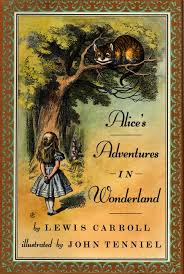
If one book was most influential on the show, it was probably “Alice in Wonderland.” "To say there is only one is unfair," said Lindelof, "but we keep coming back to 'Alice in Wonderland' thematically. That was a book that both Carlton and I remember very specifically as children. It was a gateway drug to sci-fi and fantasy in many ways."

They also reference the Narnia books by C.S. Lewis, and Madeleine L'Engle's A Wrinkle In Time.

So there, my friends, was one good reason to watch Lost.

Here's another. A lesson for aspiring writers of children's books:

Create memorable characters and the audience (i.e., your readers) will go along for the ride, no matter how bumpy or far-fetched the story occasionally seems.

Goodbye, Lost. It's been a fascinating ride.

Anyone else out there a Lost fan? What did you think?

Saturday, May 15, 2010

The Utter Silence of the Non-Rejection

As a bookseller, I post a lot of book recommendations. And then, on occasion, I've written about brain aneurysms (and also in this rather odd Valentine's Day post -- hey I'm a brain aneurysm survivor; I'm entitled).

But I don't often write about being a struggling writer of children's books. There are a lot of wonderful blogs out there about trying to get published. Read Mike Jung's hilarious blog, for instance, especially if you're interested in writing for middle grades. Or the First Novels Club. Or Frankie Diane's blog. Or Shannon's, if you're writing young adult. For picture book authors, you can't do better than Tara Lazar's blog. And there are others too numerous to mention. Thousands of us are on the same journey and it's a rocky one. Congrats to those, like Frankie and Shannon, who've recently found agents, and to Tara, who not only found an agent but got a contract for her picture book, THE MONSTORE, due in 2012 from Aladdin.

Being an aspiring writer, I've been submitting (mostly picture book) manuscripts to editors over the past few years. I currently have 5 different stories out with 12 different editors. And I've been waiting and hoping to hear something. Anything. Even a rejection letter is better than silence. But there's a disturbing new trend among publishers. What trend is that? The one in which you receive no response at all.

Nothing.

Nada.

Zip.

After a few months, you look back at your submissions log and realize, hey, I never heard from them. And if it's more than 3 or 4 months, you realize that means they don't want your manuscript (*sniff*) and that they've recycled it. While I'm all for the green initiative of recycling unwanted paper (and I would actually prefer email submissions -- it's greener and cheaper), I'm dejected by this new trend. There's more closure to receiving an actual rejection. Even a form email rejection would be an improvement.


Here's what one publisher says:

Charlesbridge accepts unsolicited manuscripts submitted exclusively to us for a period of three months. “Exclusive Submission” should be written on all envelopes and cover letters.

Due to the high volume of submissions, we respond only to manuscripts of interest to us.

All other manuscripts will be recycled. If you have not heard back from us after three months, you may assume we do not have a place for your project and submit it elsewhere.


Exclusive is something else that's quickly falling by the wayside. I'm surprised they're still expecting that.


Here's another:
As of January 1, 2007, Penguin Young Readers Group imprints will no longer respond to your unsolicited submission unless interested in publishing it.


And another, from Marshall Cavendish:
Please keep in mind that we receive many unsolicited manuscripts, and that we do read all manuscripts. For this reason, we will not send out a response unless we’re interested in publication. Therefore, if an author has not heard from us within eight to nine months of submitting a manuscript, it means there is no interest. Authors may submit to other publishers simultaneously.

Eight to nine months is unusual. At least they let you submit to other publishers simultaneously.

What do you think about this trend? Have you been dejected by the non-rejection? How do you cope?

Monday, March 29, 2010

Sense of Place

I haven't been blogging much, because I've been hard at work on a middle grade novel. It takes place in an alternate universe, but with a rural setting. I've had to draw a map for myself so I can figure out where everything is. But what I keep picturing in my mind is my grandparents' house, which was built in 1926. More on this later.

Picturing a familiar place while trying to describe a made-up one made me think about what I picture when I read novels.

When you're reading a book for the first time -- let's use


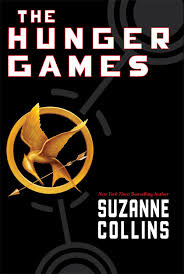
The Hunger Games by Suzanne Collins as an example --


do you picture certain scenes taking place in locales that are familiar to you? Say, your childhood home? Your backyard?

Okay. Promise not to laugh.

When I first read The Hunger Games, I couldn't help picturing the fence around Katniss's district (the one she illegally crosses to go hunting) as the fence around my elementary school playground. And yes, there was a woods (albeit a tiny one) beyond that fence. So now when I re-read the book, I automatically picture Katniss hunting in that little woods beyond that same playground. I can't help it. And that sense of place carries over to the Arena -- which, you guessed it -- looks like the larger section of the playground in my mind. Hey, it was a big playground, and not just because I was small.

With other scenes or while reading other books, I'm usually able to conjure up a setting from my imagination. But occasionally, I find myself falling back on familiarity and picturing places I've actually known. I have no clue why I do this, but I do. Perhaps a psychologist could answer that. The comfort of familiar turf? A place where I felt safe?

Who knows.

Does it mean my imagination isn't strong enough to create every scene from scratch? Or does it simply mean that I had a nurturing childhood? When I read Charlotte's Web, I picture my grandparents' house -- even though it wasn't a farm. (*Also note that I didn't read Charlotte's Web until I was in my 20s, which was when I lost my grandparents -- ooh, deep psychological stuff here*). They had three acres so since I grew up in the suburbs on a third of an acre, maybe to my mind their property was as big as a farm. And that's probably why I keep picturing it while writing a novel that takes place on a farm.

Tell me about your favorite children's books. What scenes have you pictured taking place in familiar settings?

Tuesday, November 24, 2009

First Novels Club Rules

Over at the First Novels Club, where they do everything with such awesomeness, there's a very thorough recap of the author breakfast on Sunday with Sarah Dessen and Laurie Halse Anderson (who also mentioned us briefly in her blog).

Nice job, Janine, Sara, Frankie, and Donna (and honorary member, Courtney).


And many thanks for the plug. I'm actually eternally grateful to Frankie for taking all those excellent notes and putting it on the blog, because I certainly didn't have time to take notes. And both authors had some fascinating tales to tell. For instance, they're both married to carpenters. Isn't that amazing? And I loved what Laurie Halse Anderson said about her first drafts. It's good to know that her rough drafts are, well -- what else can I say? -- crap.

Wish I could have gone to Children's Book World too, but I went straight home (after putting away 60 chairs while Cindy handled all those heavy tables -- yeah, Cindy!) and I took a nap.

I'm excited to actually own this:


My biggest regret is that I forgot to get Laurie Halse Anderson to personalize my copy of Wintergirls (she was signing someone else's books while Sarah was writing that sweet message above). Then, ahem, I was asked to take pictures for a certain group of bloggers, so I set the book on the podium, and never thought of it again until Laurie had left.

It's okay, though. Both Laurie and Sarah were really nice about signing stock for us, so I exchanged my unsigned copy of Wintergirls for a signed copy.

I read an ARC of Wintergirls months ago but had never had a chance to read Along for the Ride. I'm up to page 175 and enjoying it immensely.

Most important tip from both authors? Turn off the internet while you write. Good advice. So, um, I'm going to go write now.

Sunday, November 1, 2009

Happy Writing

Good luck to all those brave souls participating in NaNoWriMo.

Personally, I plan to use the time to FINISH a children's middle grade novel I started a long time ago and which stalled out after 30 pages. Wish me luck. Not as difficult as writing 50,000 words from scratch, right? Ha. You don't know me.

What about all you writers out there? Participating? Revising an existing novel? (INTERN has a great post about this.) Or just getting your head in gear to even think about writing a novel? It's a daunting task.

Thursday, September 17, 2009

Inspiration

I'm back from a much-needed vacation and trying to catch up.

For all of us, ahem, older aspiring writers, here is a quote from the bookseller newsletter Shelf Awareness from Wednesday, September 2, 2009:


Dick King-Smith (author of Babe, the Gallant Pig, among many other books) "was first published at age 56."

I'm just sayin'.

Tuesday, August 25, 2009

Do you write every day? Part Two

If you want to be a writer, ya gotta write. All the best writing teachers (and wonderful writers like Natalie Goldberg and Anne Lamott) say this. It's kind of obvious, no? If you write every day, you get in the habit of writing and your writing will begin to blossom. If you read yesterday's post, you'll know I didn't write much at all until my aneurysm-induced ephiphany in Feb 2007. Even now, I occasionally miss a day (and I don't beat myself up over it), but I'm writing more than I'm NOT writing. And that's progress. It may only be a paragraph a day, five or six days a week. But I'm writing. (And starting this blog actually helps me stay in the habit -- thanks, Marie Devers of Booknapped, for the tip.)

But what about published authors? Do they write every day?

When I attended a recent SCBWI conference, the weekend concluded with a brunch and an Author Panel, manned by several well-known Children's writers and a few, shall we say, less well-known. Some of the latter had published one MG or YA novel through a small press. Some had a few picture books under their belts. My hat's off to all of them (except that one woman who had no business being there because she was no more published than I am, cough cough).

By far the most successful of the bunch was Dan Gutman. If you're reading this blog, you'll probably recognize Dan Gutman as the popular author of My Weird School, a chapter book series, and the Baseball Card Adventures, a MG series, among many other books. My Weird School has sold over 2.2 million copies. As he told us the night before, it took him 15 years to become successful, but I'd say you can't argue with that kind of success.

Now back to our Sunday morning author panel. Eight or nine authors, of varying degrees of success, sat in a long line facing the rest of us (the attendees), who were still munching our bagels and fresh fruit. They took questions from the audience and passed the mic down the line. Dan Gutman sat at the far right end.

The question arose, "Do you write every day?" The responses were interesting to say the least. (I'm actually paraphrasing here because -- gulp -- I didn't take notes as I did the rest of the weekend. I'm blaming the bagel.)

"No, I write when I feel like it."

"No, I write for a month or two, then I take a few months off."

"No, I find it very hard to write every day."

Finally, finally, the mic reached Dan Gutman, who said promptly, "I write every day from 8 to 11."

Aha! The most successful writer on the panel (more successful than a recognizable YA author who is remaining nameless here because I don't want her to hunt me down) and he was the ONLY ONE who writes every day.

I'd say the verdict is in.

Monday, August 24, 2009

Do you write every day? Part One

Ok, so enough bookseller recommendations and thoughts for a while. Now I want to talk about writing. That's really why most bloggers are here, right? We love to -- no, need to -- write.

I started writing when I was eight years old. I can still remember the awful story I wrote about a girl who died and saw a path to heaven (yes -- it was that dreadful) . I ripped it into pieces and tossed in the wastebasket. Off and on throughout my school years, I wrote depressing stories and depressing poetry. In college, I went more for the urbane, sophisticated short stories. I thought I'd get published by The New Yorker. Ha. No publishing credits to my name, other than the college literary magazine, but I kept writing. Off and on. Off and on. I'd write furiously for a month or two, then stop writing for a few months or a year. (Get the picture yet?) In my twenties, I plugged away at short stories and started branching out into essays. Rejection letters began to pile up in earnest. Still I wrote off and on. A few months off. A few months on.

I married at 30 and my first son was born when I was 32. That's when I started trying to write children's books, specifically picture books. I collected more rejection letters and long before my second son was born (when I was 35), I had given up. Kaput. No more.

Most of the time I was too exhausted to clean the house, let alone write picture books. I've never understood how mothers of young children can also write. Maybe if I'd kept up with the writing and stopped worrying about cleaning the house, I'd be published by now.

I'd have a filthy house and probably be divorced, but I'd be published.

So it's a trade-off. I wouldn't take back those years of being a stay-at-home mom for anything. It was something I was actually good at (yes, I ended that sentence with a preposition, but you get the idea).

My sons are now in college, I've been working at the bookstore for seven years, and I've been writing on a regular basis for two years. What changed? It's simple. I survived a life-threatening illness in 2005. Nothing like a brain aneurysm to help you see the light. Once I'd recuperated to the point where I felt like myself again (in 2007), I told myself: if you're ever going to realize your dream of writing children's books, you need to sit down and write. Right?

To be continued...